Best MCP Hosting Platforms 2026: Complete Comparison
Compare the top MCP hosting platforms: agnexus, Vercel, AWS Lambda, Cloudflare Workers, and Alpic. Features, pricing, use cases, and recommendations to help you choose.
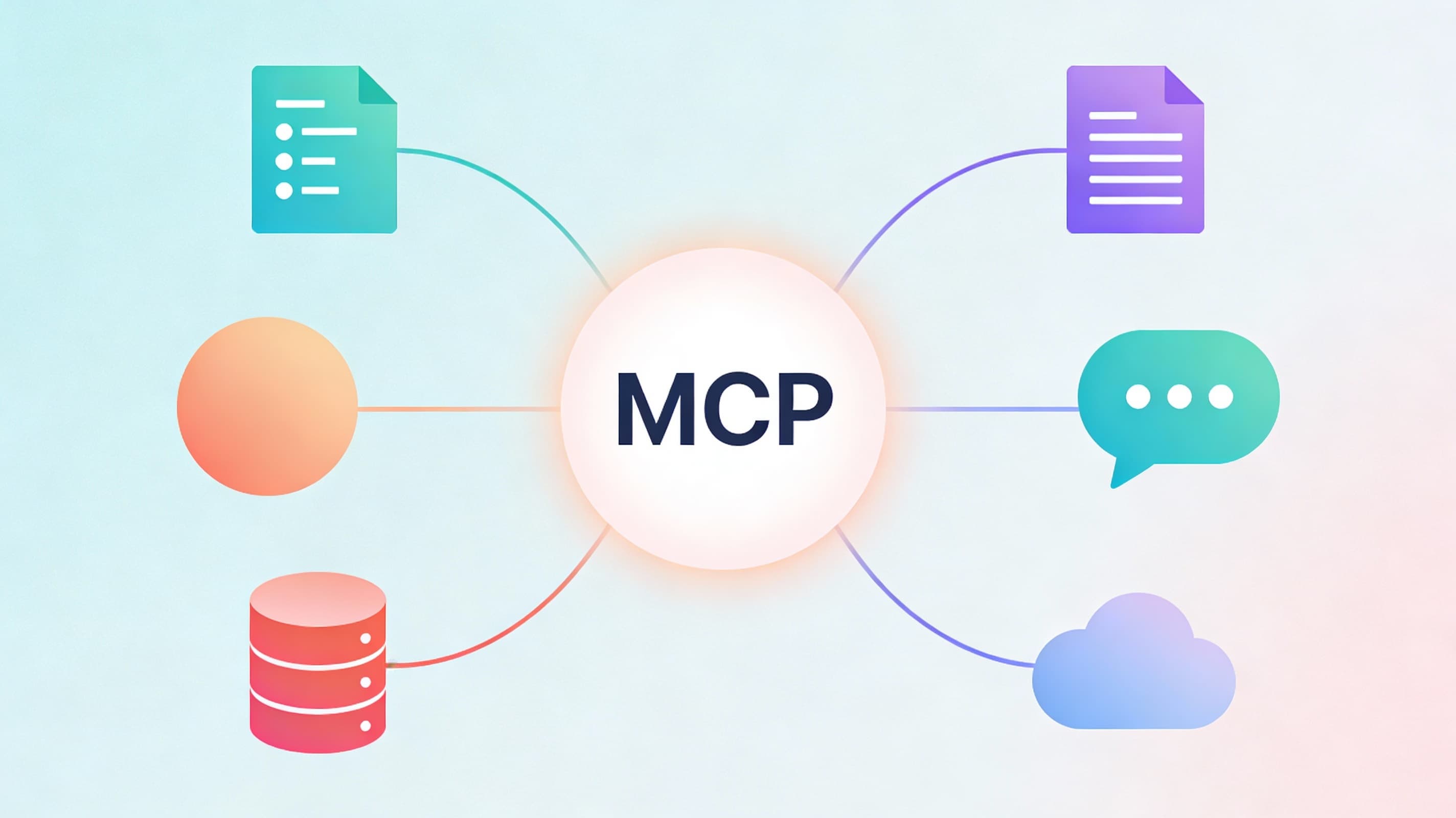
The Model Context Protocol (MCP) has rapidly evolved from an experimental standard to the backbone of AI agent infrastructure. Since OpenAI's adoption in March 2026, MCP has become the de facto way for AI agents like Claude, ChatGPT, and Cursor to reliably connect to external tools, databases, and services. This guide compares five leading platforms—agnexus, Vercel, AWS Lambda, Cloudflare Workers, and Alpic—to help you choose the right infrastructure for your MCP servers.
What Makes a Great MCP Hosting Platform?
Before diving into specific platforms, let's establish what matters when evaluating MCP hosting infrastructure. Not all platforms are created equal, and what works for a solo developer experimenting with MCPs differs dramatically from what an AI agency needs to deploy client integrations at scale.
- Setup complexity and time-to-deployment — Can you deploy an MCP server in minutes, or does it require days of infrastructure configuration?
- MCP-specific features — Does the platform understand MCP architecture, provide pre-built server templates, or offer tooling for common MCP patterns?
- Marketplace and discovery capabilities — A curated marketplace of production-ready MCP servers can save weeks of development time.
- Scaling and performance — For AI agents making frequent tool calls, latency compounds quickly.
- Pricing transparency and predictability — Understanding total cost of ownership helps avoid bill shock at scale.
Platform-by-Platform Analysis
agnexus: Deploy Existing MCPs Without Writing Code
agnexus is a platform purpose-built for deploying and managing MCP servers. The key differentiator: you don't need to build anything from scratch. Browse the marketplace, find an MCP that connects to the tool you need, and deploy it in one click. Currently in early access, agnexus focuses on making MCP deployment accessible to everyone—not just developers with framework expertise.
The marketplace is agnexus's core differentiator. It provides a growing collection of pre-built MCP servers that you can deploy instantly—no coding required. Need to connect Claude to Notion? There's an MCP for that. Want to give your AI agent access to GitHub, Slack, or a database? Browse, click deploy, configure your API keys, and you're running in production. This “deploy, don't build” approach saves weeks of development time for common integrations.
One-click deployment from code is also supported for teams building custom MCPs. Upload a ZIP file or connect a GitHub repository, and agnexus handles Docker containerization, deployment, and subdomain routing. The platform automatically detects Python and Node.js projects and can generate Dockerfiles (experimental) for projects without one.
GitHub integration enables automatic deployments on every push to your tracked branch. Connect a repository once, and agnexus handles building, deploying, and managing versions as you iterate.
agnexus uses a flat-tier pricing model in Euros. The Free plan includes 1 MCP deployment with 3,000 credits (~50 minutes of runtime) for testing. The Starter plan at 29€/month unlocks 3 MCPs with 300,000 credits (~83 hours), custom subdomains, access keys, and advanced analytics. The Growth plan at 119€/month provides 15 MCPs with 3 million credits (~833 hours), priority support, and always-on instances.
Best for: Teams who want to deploy MCP servers without writing code, AI agencies deploying similar integrations across multiple clients, startups building AI products who need common tool connections fast, and developers exploring the MCP ecosystem through ready-to-deploy servers.
Limitations: As an early access platform, some features are still in development including team collaboration, OAuth support, custom domains, and advanced debugging tools. Best suited for teams who value speed of deployment over building custom frameworks from scratch.
Try agnexus free
Deploy your first MCP server in minutes with our one-click deployment and growing marketplace.
Vercel: Serverless Platform with MCP Support
Vercel, known for its exceptional developer experience with Next.js and frontend deployment, added MCP server support in 2025. The platform leverages its existing serverless infrastructure to host MCP servers alongside web applications, making it attractive for teams already in the Vercel ecosystem.
Git-based deployment represents Vercel's core strength. Push code to GitHub, and Vercel automatically builds, deploys, and scales your MCP server. This workflow integrates naturally with modern development practices and CI/CD pipelines.
Session persistence challenges emerged as developers deployed MCP servers to Vercel. The stateless nature of serverless functions means session data doesn't persist between requests without external storage. Solutions involve adding Redis or Vercel KV for session management, introducing additional complexity and cost.
Vercel pricing starts with a Hobby tier (free) for personal projects, though it includes significant limitations on compute resources and execution time. The Pro tier ($20/month) adds team collaboration features and expanded resources. Beyond the base subscription, compute costs accrue based on actual usage.
Best for: Teams already using Vercel for frontend deployment who want to colocate MCP backend logic, and Next.js developers preferring unified tooling.
Limitations: Not purpose-built for MCP—lacks marketplace discovery and MCP-specific monitoring. Execution time limits (5-15 seconds on hobby/pro tiers) constrain complex agent workflows.
AWS Lambda: Enterprise-Grade Serverless Compute
AWS Lambda brings the power and complexity of Amazon's cloud infrastructure to MCP hosting. While not designed specifically for MCP, Lambda's event-driven architecture and massive scale make it viable for teams with AWS expertise and existing infrastructure investments.
Infinite scaling and event-driven execution represent Lambda's core value proposition. Functions automatically scale from zero to thousands of concurrent invocations based on demand. You pay only for actual compute time in milliseconds, making Lambda extremely cost-efficient for intermittent workloads.
Complexity remains Lambda's biggest challenge for MCP hosting. Deploying a production-ready MCP server involves orchestrating multiple AWS services: Lambda functions, API Gateway for HTTP endpoints, IAM roles for permissions, and CloudWatch for monitoring. What takes minutes on a specialized platform can consume days on Lambda.
AWS Lambda uses pay-per-invocation pricing with a generous free tier (1 million requests and 400,000 GB-seconds per month), but costs become difficult to predict as usage scales. Network egress, CloudWatch logs, and associated services add complexity to total cost calculations.
Best for: Enterprises with existing AWS infrastructure and in-house expertise, teams requiring deep integration with AWS services (S3, DynamoDB, SQS), and organizations with strict compliance requirements.
Limitations: Steep learning curve and high DevOps overhead, no MCP-specific tooling or marketplace, cold start latency with container deployments, and complex pricing across multiple services.
Cloudflare Workers: Edge Computing for Global Performance
Cloudflare Workers brings MCP servers to the edge, deploying lightweight microVMs across 300+ cities worldwide. This architecture delivers exceptionally low latency by running MCP server code geographically close to users and AI agents making requests.
Edge deployment and sub-second cold starts differentiate Cloudflare from traditional serverless platforms. Workers start in milliseconds rather than seconds, and automatic request routing directs traffic to the nearest edge location.
Official Cloudflare MCP servers demonstrate the platform's commitment to the protocol. Cloudflare published multiple production-ready MCP servers including documentation search, Workers bindings management, observability tools, and browser rendering.
Cloudflare Workers pricing starts with a generous free tier (100,000 requests daily) suitable for development and small-scale production use. The $5/month plan dramatically increases limits. Usage-based pricing beyond included requests charges $0.50 per million requests—among the most competitive in the serverless space.
Best for: Applications requiring global edge performance and minimal latency, teams already using Cloudflare's ecosystem (KV, R2, D1).
Limitations: No marketplace for discovering existing MCP servers, requires understanding Cloudflare-specific services and APIs.
Alpic: Framework-First MCP Platform for ChatGPT Apps
Alpic emerged in 2025 as a cloud platform built specifically for MCP, securing $6 million in pre-seed funding. The Paris-based startup positions itself as “Vercel + Stripe + Supabase for MCPs,” with a strong focus on developers building custom ChatGPT apps using their Skybridge framework.
Skybridge framework is Alpic's core differentiator—an open-source TypeScript framework for building ChatGPT apps and interactive MCP clients. It provides React hooks, type-safe APIs, hot module replacement, and widget-to-LLM context synchronization. If you're building a custom ChatGPT application from scratch, Skybridge provides an opinionated starting point.
MCP-native observability tracks which AI clients connect to your servers (Claude, Cursor, ChatGPT), tool call patterns, sessions, and latency. This visibility helps optimize agent experiences with protocol-specific metrics rather than generic HTTP analytics.
Publishing and distribution features help developers share MCPs through the official MCP Registry and prepare for distribution channels like the ChatGPT App Directory. A built-in playground lets you collect user feedback before publishing.
Alpic uses request-based pricing in USD. The Free plan includes 10,000 requests/month with 7-day analytics retention. Pro at $30/month unlocks 200,000 requests, 30-day analytics, custom domains, and OAuth DCR proxy. Business at $300/month provides 2 million requests, 1-year analytics retention, SLA with Slack Connect support, and static IP addresses. Additional requests cost $150 per million on paid plans.
Best for: Developers building custom ChatGPT apps from scratch who want an opinionated TypeScript framework, teams needing detailed MCP-specific observability, and projects requiring OAuth integration or publishing to the MCP Registry.
Limitations: Alpic is designed for developers who want to build MCP servers, not deploy existing ones. There's no marketplace of pre-built MCPs—you need to write code or use their starter templates. The framework-first approach means more flexibility but also more development work compared to one-click deployment of existing integrations.
Feature Comparison at a Glance
| Feature | agnexus | Vercel | AWS Lambda | Cloudflare Workers | Alpic |
|---|---|---|---|---|---|
| Setup Complexity | Low (one-click) | Low (git-based) | High (multi-service) | Medium (wrangler CLI) | Low (one-click) |
| MCP-Specific Features | Yes (marketplace, analytics) | No (adapted serverless) | No (generic compute) | Partial (MCP servers) | Yes (MCP-native) |
| Pre-Built MCP Marketplace | Yes (growing) | No | No | No | No (templates only) |
| Deployment Time | Minutes | Minutes | Hours to days | 30-60 minutes | Minutes |
| Auto-Scaling | Automatic | Automatic | Automatic | Automatic | Automatic |
| Cold Start Latency | Low | Medium | High (containers) | Very low (edge) | Low |
| Global Edge Deployment | Regional | Global CDN | Regional | Yes (300+ locations) | Serverless |
| Pricing Model | Flat tiers (credits) | Subscription + usage | Pay-per-invocation | Free tier + usage | Request-based tiers |
| Starting Price | Free, then 29€/mo | Free, then $20/mo | Free tier, then variable | Free, then $5/mo | Free, then $30/mo |
| Execution Time Limits | Credit-based | 5-15 seconds | 15 minutes | CPU time limits | Request-based |
| Production Maturity | Early Access | Mature | Mature | Mature | Production |
| Best For | MCP-focused teams | Next.js teams | AWS enterprises | Global edge apps | ChatGPT app builders |
Choosing the Right Platform: A Decision Framework
Selecting an MCP hosting platform depends on your team's expertise, project requirements, and long-term architecture goals. Here's a structured approach to guide your decision.
If you want to deploy existing MCPs without building anything
agnexus is the clear choice. Its marketplace of pre-built MCPs means you can deploy integrations for common tools (Notion, GitHub, Slack, databases) in minutes without writing a single line of code. Browse, click deploy, add your API credentials, done. This is ideal for AI agencies deploying similar integrations across multiple clients, or teams who need tool connections fast without framework overhead.
If you want to build custom ChatGPT apps from scratch
Alpic's Skybridge framework provides an opinionated TypeScript starting point with React hooks, type-safe APIs, and widget state management. If you're building a custom interactive AI application and want framework-level abstractions, Alpic gives you more structure. The trade-off is development time—you're building, not deploying.
If you're already in the Vercel/Next.js ecosystem
Vercel makes sense if you're already deploying frontends there and want to colocate backend MCP logic. The unified git-based workflow and developer experience translate well, though expect to invest time solving MCP-specific challenges like session persistence and timeout management.
If you have existing AWS infrastructure
AWS Lambda integrates naturally with your existing services, compliance frameworks, and operational practices. The learning curve and DevOps complexity justify themselves if you have in-house AWS expertise. Budget for significant engineering time to build production-grade deployment, monitoring, and security around Lambda-hosted MCPs.
If you need global low-latency performance
Cloudflare Workers excels at edge deployment. The sub-second cold starts and geographic distribution minimize latency for users worldwide. This matters when AI agents make frequent tool calls—every 100ms of latency compounds across interactions.
If you need MCP-specific observability and OAuth
Alpic offers detailed MCP-native analytics showing which AI clients connect (Claude, Cursor, ChatGPT), tool call patterns, and session tracking. Their OAuth DCR proxy simplifies authentication for MCPs that need it. If visibility into agent behavior is critical, Alpic's monitoring is more mature than most alternatives.
Real-World Use Case Scenarios
Scenario 1: AI Agency Deploying CRM Integration for Multiple Clients
An AI consultancy builds conversational agents for mid-market companies, connecting Claude or ChatGPT to client CRM systems. Each client uses similar workflows but different CRM instances.
Recommended approach: Deploy pre-built CRM MCPs from agnexus marketplace, one per client. Configure each MCP with client-specific API credentials. Total setup time: minutes versus hours building custom connectors.
Scenario 2: SaaS Startup Building Multi-Tool AI Assistant
A productivity startup builds an AI assistant that orchestrates actions across Google Calendar, Notion, Slack, and Trello. The product requires reliable infrastructure and fast iteration cycles.
Recommended approach: Deploy marketplace MCPs from agnexus for each tool integration. Within a day, you have four working MCP connections without writing custom code. If you need custom UI widgets or ChatGPT-specific interactions later, consider Alpic's Skybridge for those components while keeping the standard tool integrations on agnexus.
Scenario 3: Enterprise Internal AI Agents with Strict Security Requirements
A Fortune 500 company builds internal AI agents to automate expense reporting and vendor management. Requirements include data residency, SOC 2 compliance, and audit logging.
Recommended approach: Deploy MCPs on AWS Lambda within the company's existing AWS organization. Use IAM roles for permissions, CloudWatch for logging, and VPC networking for private connectivity.
Conclusion
The MCP hosting ecosystem has matured rapidly, offering developers genuine choice between specialized platforms and adapted general-purpose infrastructure. No single platform dominates every use case—the right choice depends on your team's expertise, project requirements, and architectural priorities.
agnexus is the fastest path from zero to running MCP. Its marketplace of pre-built servers means you can deploy integrations without writing code—ideal for AI agencies, startups needing common tool connections, or anyone who values deployment speed over custom development. As an early access platform, it's actively evolving with new features and marketplace MCPs shipping regularly.
Alpic is for developers who want to build custom MCP servers and ChatGPT apps using their Skybridge framework. It offers excellent MCP-native observability, OAuth support, and publishing tools. The trade-off: you're writing code, not deploying existing integrations. At $30-300/month with request-based pricing, it's positioned for teams building custom applications rather than deploying off-the-shelf MCPs.
Vercel fits teams already in its ecosystem, particularly those deploying Next.js frontends alongside MCP backends.
AWS Lambda serves enterprises with existing AWS infrastructure and compliance requirements.
Cloudflare Workers excels at global edge deployment for latency-sensitive applications.
As the AI agent ecosystem continues evolving, MCP infrastructure will become as fundamental as API gateways or databases today. Start with the platform matching your current needs, knowing you can migrate or complement it as requirements grow.
Ready to deploy your first MCP server?
agnexus offers a free tier with one-click deployment and a growing marketplace of pre-built MCPs. Deploy your first integration in under five minutes.